
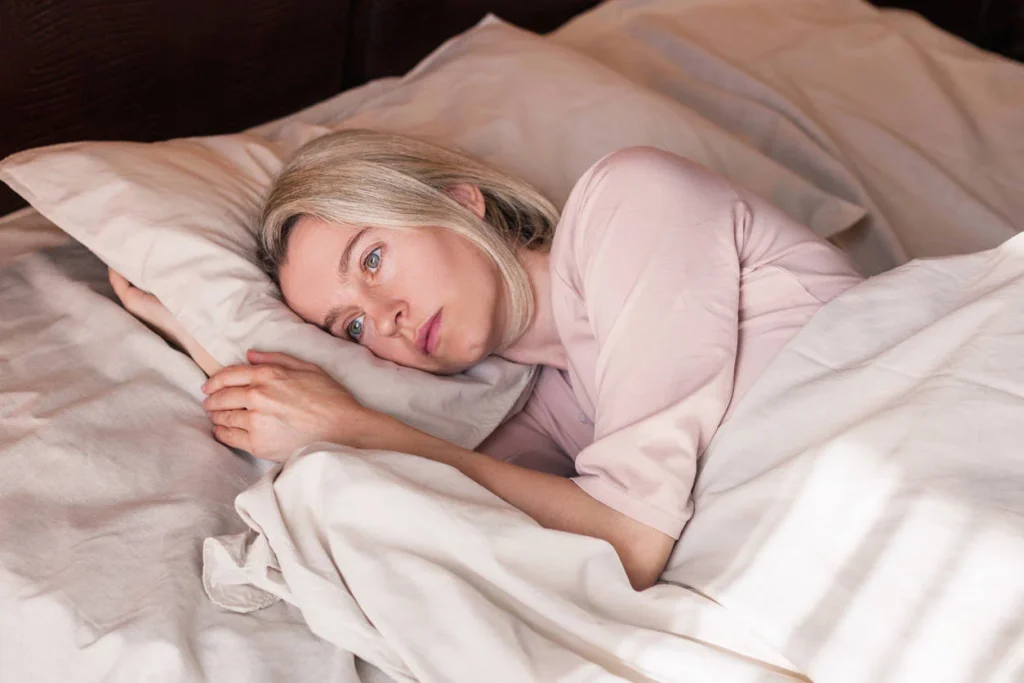
If you’re a woman who feels permanently exhausted while your partner sleeps soundly beside you, you’re not imagining it. A growing body of research points to a real “gender sleep gap”, a measurable difference in how well, and how long, women rest compared with men.
The picture is more surprising than the headline suggests. In carefully controlled sleep-lab studies, women actually spend slightly more time asleep than men by roughly 11 minutes a night. Yet out in the real world, women consistently report worse, more broken, and often shorter sleep. Surveys suggest nearly half of women regularly fall short of the recommended seven hours, compared with a smaller share of men.
So what’s going on? The answer is a tangle of biology and daily life. Here’s why women so often end up shortchanged on rest.
The gender sleep gap is real and measurable
It helps to separate two questions: how much time women spend sleeping versus how good that sleep actually is.
On paper, women edge out men slightly on duration. But quality tells a different story. Women are more likely than men to wake repeatedly through the night, take longer to feel rested, and rate their own sleep as poor. One large U.S. survey found that roughly 49% of women get less than seven hours a night versus about 41% of men, and that women are noticeably more likely to wake up every single night.
In other words, women can be lying in bed longer and still wake up feeling worse. The 11-minute “advantage” is largely an attempt by the body to claw back the restorative rest that keeps getting interrupted.
1. Hormones disrupt women’s sleep at every life stage
The single biggest biological driver of the gender sleep gap is hormonal fluctuation, something women experience continuously for decades.
Estrogen and progesterone both help regulate sleep, and their levels shift dramatically across the menstrual cycle, pregnancy, and menopause. It isn’t always the level of a hormone that causes problems, but the fluctuation itself.
- Menstrual cycle: As many as two in three women report sleep problems around their period, often when estrogen and progesterone dip to their lowest.
- Pregnancy: Hormonal changes, physical discomfort, and frequent trips to the bathroom make pregnancy-related insomnia common.
- Perimenopause and menopause: Hot flushes, night sweats, and heightened anxiety are notorious sleep wreckers. The risk of sleep apnea also rises sharply, some estimates suggest up to two-thirds of postmenopausal women are affected, often with subtle symptoms like light snoring or morning headaches that go undiagnosed.
No single “normal” sleep pattern fits all women, which is partly why so many feel dismissed when their experiences don’t match expectations.
2. Women face higher rates of insomnia and sleep disorders
Women aren’t just more sensitive to hormones, they’re statistically more prone to several sleep disorders.
Women are around 40% more likely than men to develop insomnia. Restless legs syndrome, which makes it hard to fall and stay asleep, is roughly twice as common in women. And while men have higher rates of obstructive sleep apnea earlier in life, that gap closes after menopause.
These conditions feed a frustrating cycle: a disorder disrupts sleep, the lost sleep worsens daytime functioning, and the resulting stress makes the disorder harder to manage.
3. Anxiety, depression, and stress hit women harder
Mental health and sleep are deeply intertwined, and the conditions most strongly linked to insomnia, anxiety and depression, are diagnosed in women at roughly twice the rate of men.
Stress hormones play a direct role here. Cortisol, which promotes wakefulness, can keep a racing mind alert long after the lights go out. Women who carry chronic stress, worry, or low mood into the bedroom often find that the very act of trying to sleep becomes another source of pressure.
4. The “invisible labor” of caregiving steals women’s rest
Biology only explains part of the gap. Social expectations explain much of the rest.
Across most households, women still shoulder a larger share of caregiving, household management, and emotional labor, and a lot of it happens at night. Women are far more likely than men to be the parent who gets up for a crying baby, soothes a sick child, or stays mentally “on call” for the household even while in bed.
The data backs this up. On a typical day, men spend roughly half as much time on caregiving as women. One study found that only 48% of mothers under 45 got at least seven hours of sleep, compared with 62% of women without children. National time-use surveys in several countries show working women sleeping less, and in shorter unbroken stretches, than working men.
This kind of fragmented, “always alert” sleep is especially damaging because deep, restorative sleep depends on long uninterrupted cycle, exactly what nighttime caregiving destroys.
So do women actually need more sleep than men?
This is where you should be a little skeptical of viral claims. The popular idea that women need “dramatically more” sleep than men is not firmly established. Some sleep specialists note there’s no strong evidence of a fundamental biological reason women require more hours.
What experts can say confidently is this: because women face more frequent sleep disruptions, they may need more time in bed simply to bank the same amount of quality rest. The goal isn’t a magic number of hours, it’s how refreshed you feel the next day. For most adults of any gender, seven to nine hours of quality sleep remains the benchmark.
How to close your own sleep gap
You can’t rewrite your hormones or instantly redistribute household labor, but you can target the specific disruptors costing you rest:
- Track your patterns. Notice whether poor sleep clusters around certain points in your cycle, and plan demanding days accordingly.
- Cool the bedroom. Breathable cotton sheets, a cooling mattress, and a slightly colder room help with night sweats and hot flushes.
- Protect uninterrupted blocks. Where possible, share or alternate nighttime caregiving so one person isn’t always the default responder.
- Address mental load directly. Therapy, mindfulness, regular exercise, and a wind-down routine all lower the cortisol that keeps you wired at bedtime.
- Don’t ignore the symptoms. Loud snoring, gasping, persistent insomnia, or unrelenting daytime fatigue are worth raising with a doctor, sleep apnea and other disorders in women are frequently missed.
- Time medications wisely. If you take hormonal or other treatments, ask your provider whether the timing could be affecting your sleep.
Frequently asked questions
Do women really sleep less than men? In real-world surveys, women are more likely than men to get under seven hours and to wake during the night. In lab settings they spend slightly more time asleep, about 11 minutes, but with poorer quality, so they often feel less rested.
Why am I always so tired even after a full night in bed? Time in bed isn’t the same as restorative sleep. Hormonal shifts, undiagnosed sleep disorders, anxiety, and nighttime interruptions can fragment your sleep so you wake unrefreshed even after eight hours.
Does menopause make sleep worse? For many women, yes. Hot flushes, night sweats, anxiety, and a rising risk of sleep apnea make perimenopause and menopause some of the most disruptive periods for sleep.
How many hours of sleep do women actually need? Most adults, regardless of sex, need seven to nine hours of quality sleep. The best gauge is whether you wake feeling restored.