
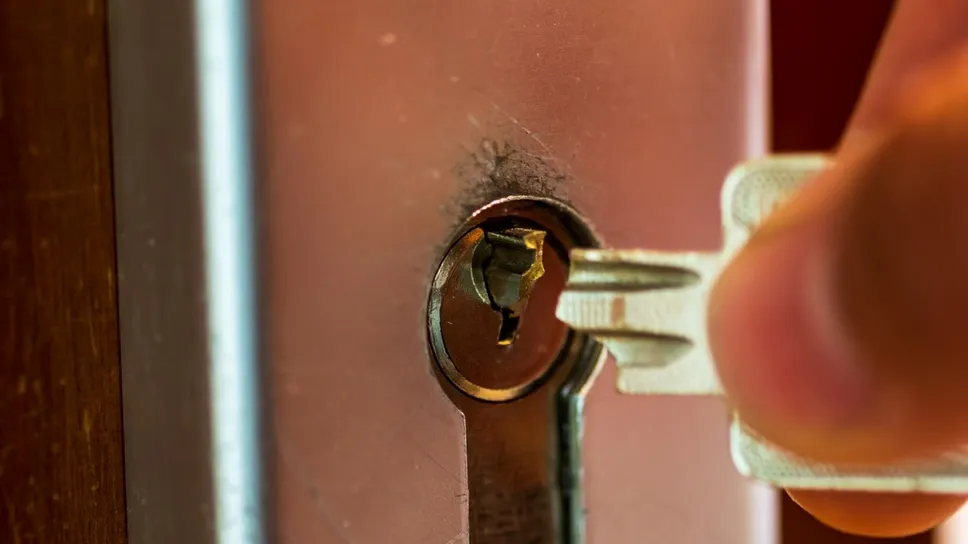
It happens in an instant. You turn your key, feel a sickening snap, and suddenly half of it is in your hand while the other half is stuck inside the lock. Before you start digging, poking, or forcing anything, take a breath. The single most common way people turn a small problem into an expensive one is by reacting too fast. This guide walks you through exactly what to do, what to avoid, and how to get that broken piece out without wrecking your lock.
First, stop and avoid these instant mistakes
In the heat of the moment it is tempting to jam the other half of the key back in and try to turn it. Do not. These first few decisions matter most.
- Do not try to use the broken-off piece. Pushing the broken half back into the keyway to try to unlock the door almost never works, and it shoves the stuck fragment deeper, making removal much harder.
- Do not force or twist anything. Excessive force can snap a fragment further in or damage the delicate pins inside the lock.
- Do not lock the door if it is still open. If the key broke before the bolt was thrown, leave it unlocked so you do not get shut out entirely.
- Keep the piece in your hand. Do not throw it away. A locksmith can use it to cut you a fresh key later.
Take a moment to organize your tools and look closely at the lock before you touch it. Calm and methodical wins here.
Step 1: Assess and prepare the lock
A quick assessment tells you whether this is a do-it-yourself job or a call to the pros. Look at how much of the key is showing. If a piece is sticking out, your odds are good. If it is flush with the keyway or buried inside, it is trickier. Also consider the lock type, since car locks, smart locks, and high-security locks are best left to a professional.
Two bits of prep dramatically improve your chances:
Line up the keyway. Most locks will not release a key unless the cylinder is turned back to the position where the key normally goes in and out, which on most home locks is vertical. Gently rotate the broken piece, or nudge it with a tool, until the keyway is aligned. Skipping this step is why many removal attempts fail.
Add lubricant. Spray a small amount of a silicone-based or graphite lubricant into the keyway to help the fragment slide free. Avoid relying on WD-40 if you can, since heavy oil can gum up the mechanism over time. A light, oil-free lubricant is the better choice.
Step 2: Try these removal methods
Work from the gentlest method to the most aggressive, and give each one only a couple of patient attempts.
If part of the key is sticking out
Needle-nose pliers or tweezers. This is the easiest fix. After lubricating, grip the exposed end firmly with needle-nose pliers or thin tweezers and pull straight out with steady pressure. Do not twist, and do not push inward. If it resists, wiggle it very slightly side to side as you pull to ease it past the pins.
If the key is flush or just inside the keyway
A paperclip or bobby pin. Straighten a thin paperclip or open a bobby pin and slide it into the keyway alongside the broken key, ideally along the top or bottom. Try to hook one of the cuts in the key, then drag the fragment outward, sometimes a little at a time. Thinner clips tend to grip better. Using two clips to pincer the piece can also work.
A broken key extractor tool. This is the proper tool for the job and inexpensive to buy. These thin tools have small barbs or hooks (a single or double hook works best) that you slide down the side of the key, twist to catch a cut, then pull to draw the fragment out. It may take a few tries, but it is far safer than improvising.
The tapping method. If the lock faces downward, such as a padlock, align the keyway and gently tap the body of the cylinder with a light tool while applying soft outward pressure. Vibration plus gravity can sometimes coax the piece out. Tap lightly, since heavy blows can damage the lock.
A small saw blade (last resort). A thin jigsaw, hacksaw, or coping saw blade can be slid into the keyway with the teeth pointing down or toward you, hooked onto the key, and pulled out. This can scratch or damage the lock if done carelessly, so treat it as a final do-it-yourself option.
Super glue (use with great caution). Some people glue the exposed end of the key to a matchstick or toothpick, let it set, and pull. Only consider this if a piece is sticking out, never if the key is deep inside. If glue seeps into the mechanism, it can bond the internal parts and ruin the entire lock, so this is genuinely a last resort.
Mistakes that make everything worse
Even with good methods, a few errors can cost you the lock:
- Pushing or forcing the fragment deeper instead of pulling it outward.
- Forgetting to align the keyway, so the lock simply will not let go of the key.
- Drowning the lock in heavy oil, which clogs the pins.
- Hammering or prying hard enough to bend internal components.
- Letting super glue reach the inside of the cylinder.
- Stubbornly repeating a failed method over and over. After a couple of honest attempts, it is time to stop.
When to call a locksmith
There is no shame in calling for help, and sometimes it is the smartest, cheapest move in the long run. Reach out to a professional locksmith if:
- The key is deep inside or flush and will not budge after a couple of careful tries.
- You are dealing with a car lock, smart or digital lock, high-security lock, or an unusual padlock or tubular lock.
- You are worried about damaging the lock or you have already caused damage.
- You simply do not have the right tools and cannot get them quickly.
A locksmith can extract the fragment without harming the mechanism and, if needed, rekey or replace the lock and cut you a new key.
After you get the key out
Once the fragment is free, do not just breathe a sigh of relief and move on. Inspect the lock and test it with your spare key to make sure it still turns smoothly. If the key snapped because the lock was stiff, rusty, or worn, address that cause, since it will likely break another key otherwise. A little lubricant and regular maintenance go a long way. And remember to get a fresh key cut, ideally from the original or the broken pieces, so you are not stuck again.
Frequently asked questions
Can I get a broken key out myself? Often yes, especially if part of it is visible. Lubricate the lock, align the keyway, and use needle-nose pliers, tweezers, a paperclip, or a key extractor tool. If it is deep or stuck fast, call a locksmith.
Why is the broken key stuck so firmly? Usually the keyway is not aligned to the release position, or the fragment is caught on the internal pins. Returning the cylinder to the normal vertical position and adding lubricant often frees it.
Will super glue work to pull it out? It can if a piece is sticking out, but it is risky. If glue gets inside the lock, you may have to replace the whole thing, so try other methods first.
Is the lock ruined now? Not necessarily. If you remove the fragment gently without forcing it, the lock is usually fine. Test it afterward and watch for stiffness or damage.